At Aditya Birla Memorial Hospital, joint replacement care is focused on damaged joints in the knee, hip, and shoulder. We offer treatment for joint pain, stiffness, and reduced mobility after thoroughly diagnosing the type and extent of joint damage.
Our arthroplasty specialists recommend a treatment plan best suited to the patient's condition and overall health. Joint replacement treatment may include conservative care, physiotherapy, medication, minimally invasive procedures, or surgery.
Patients looking for joint replacement in Pimpri can consult our orthopaedic surgeons for an assessment and suitable treatment. Our services include diagnostic imaging, surgical care, physiotherapy, rehabilitation, and pain management when required.
Joint replacement is a specialised surgical procedure focused on damaged joints of the knee, hip, and shoulder. It involves removing damaged portions of a joint and replacing them with artificial components.
Treatment is based on the joint affected, the extent of damage, and the patient's overall health. The aim is to reduce persistent pain and improve movement while restoring joint function.
Patients suffering from ongoing joint problems should consult a specialist for joint replacement in Pimpri, who can examine the condition and suggest an appropriate treatment approach based on the diagnosis.
Not every joint problem requires immediate surgery. Some conditions may be managed conservatively, while others require active treatment because of pain, stiffness, or loss of function.
Doctors consider joint replacement surgery when:
An orthopaedic specialist can assess the available options and explain why a particular approach may be appropriate.
Joint replacement services offer treatment for the conditions involving:
The treatment plan is determined by the individual's diagnosis, not a single approach for every patient.
Depending on the joint and extent of damage, treatment may involve surgery or a combination of conservative therapies. Surgical planning considers the joint's condition, surrounding structures, and the patient's overall health.
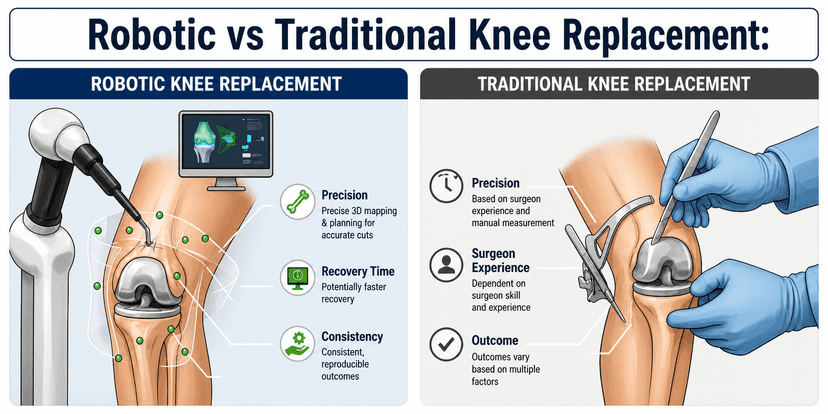
Some procedures may involve replacing only the damaged portion while maintaining healthy bone and tissue wherever possible. For example, selected knee damage may be treated with partial knee replacement, which replaces only the affected compartment while retaining the healthy parts of the joint.
The appropriate procedure depends on the condition and individual clinical factors.
Accurate diagnosis is an important part of joint replacement in Pimpri. Evaluation may involve detailed medical history, physical examination, imaging, and laboratory investigations when required. The treatment considers:
This structured approach helps specialists develop a treatment plan based on the patient's specific clinical needs.
Patients choose Aditya Birla Memorial Hospital as a leading joint replacement hospital in Pimpri-Chinchwad for fast and accurate diagnosis, appropriate treatment strategy, and support throughout recovery. Our approach to joint replacement care focuses on:
As a reputed orthopaedics hospital in Pimpri-Chinchwad, Pune, our services also cover fracture and trauma care, arthroscopy, sports injury management, spine care, and paediatric orthopaedics. Patients can discuss their diagnosis and treatment options with our orthopaedic doctors in Pimpri-Chinchwad.
The treatment journey can vary depending on the joint affected and the extent of damage. Understanding each step can help patients know what to expect throughout their care.
Joint replacement surgery treats damaged joints of the knee, hip, and shoulder. It is commonly recommended for advanced arthritis, injury-related damage, and conditions causing persistent pain and restricted movement.
No. The treatment depends on which joint is affected, how severe the damage is, and the patient’s general health. Some people may improve with medicines and physiotherapy, while others may need surgery or other treatments.
In selected cases, a partial knee replacement may replace only the damaged compartment while preserving healthy parts of the joint. The suitability of this approach depends on the extent of damage and the patient's clinical condition.